
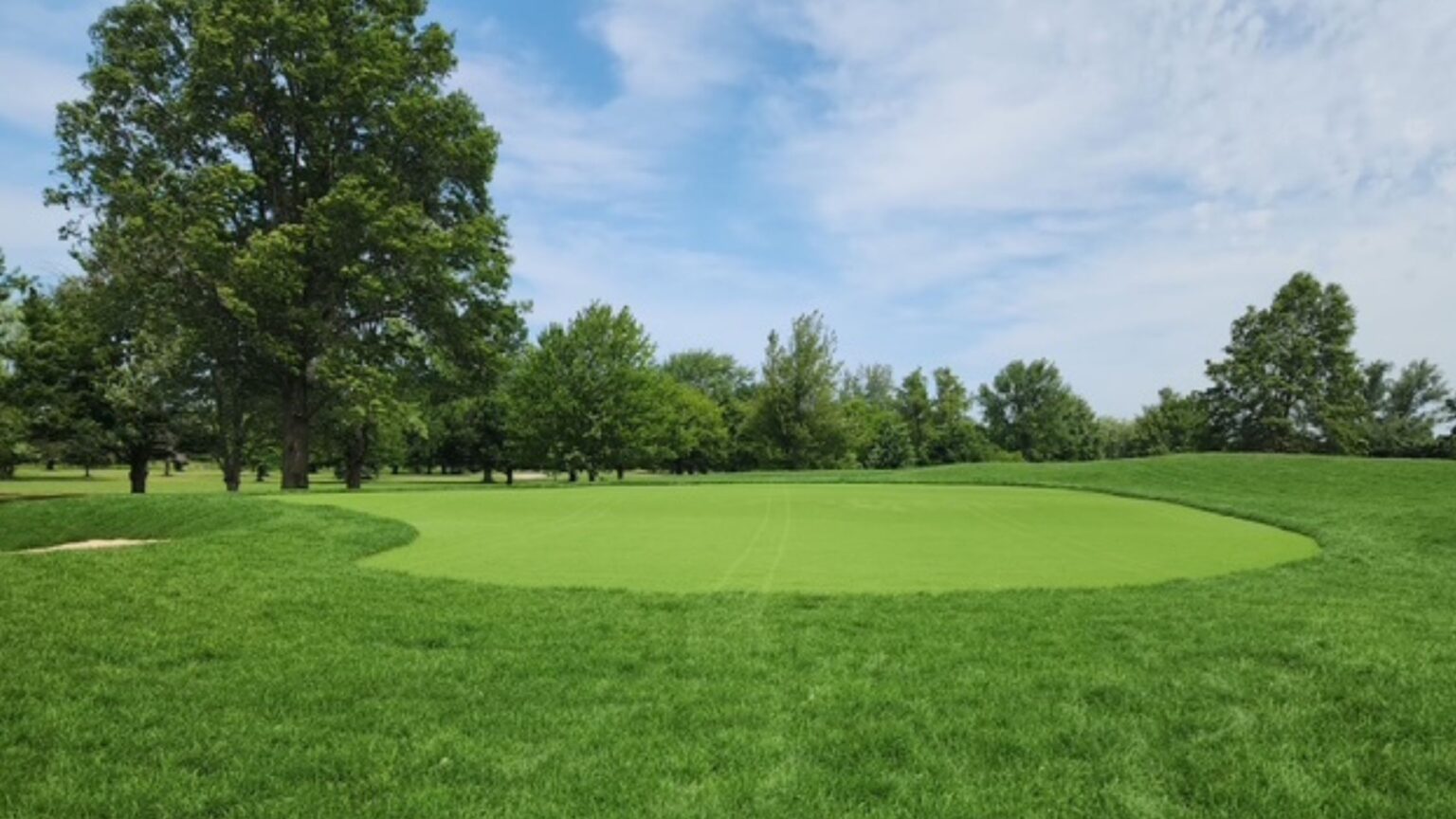
Golf Green Construction Built Around 2-Inch Slit Drainage
Turf Rehab designs and builds putting greens from the subgrade up, around our own 2-inch slit drainage system. We start with how water will leave the green, then build a sand rootzone that stays firm, true and playable after rain.
Greens
Golf Green Construction Starts Below the Putting Surface
Golf green construction is mostly about the parts nobody sees. Players judge a green by speed, firmness and how it rolls. All of that depends on the subgrade, the drain lines, the backfill and the rootzone mix underneath. If those layers are built wrong, the green will hold water, roots will stay shallow and your superintendent will spend years fighting it. If they're built right, the green drains, firms up quickly after a storm and stays consistent from the front edge to the back.
That's why greens are a natural fit for us. Turf Rehab is a golf course drainage and construction contractor out of Cambridge, NY. Our President, Mark Rowan, has 17 years of golf course construction experience and specializes in drainage system development. Mark Luckhardt, our Turf Consultant, developed the 2-inch slit drainage process more than 35 years ago. Together they bring more than 50 years of combined experience fixing wet greens and saturated turf.
We don't build new greens to the USGA or California method. We design and build our own modified green around the 2-inch slit drainage process, and we repair existing USGA and California greens when they stop draining. Some clubs rebuild one problem green. Others rebuild several as part of a bigger project. Either way, the work starts with drainage. If you're planning a larger build, see our main golf course construction page.
How Turf Rehab Builds a Green
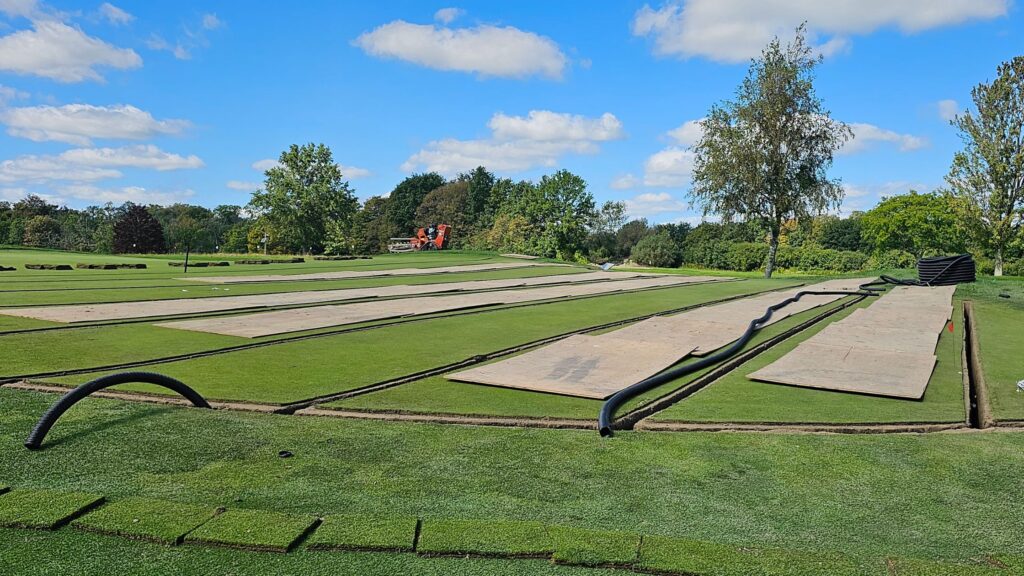
Our greens are a modified build designed by Turf Rehab around the 2-inch slit drainage process Mark Luckhardt developed. Instead of a gravel blanket under the rootzone, 2-inch slit drainage pipe runs through the green's subgrade, and one homogeneous sand mix fills the pipe trenches and forms the rootzone above them.
The mix leans to the organic side, such as a 70% sand and 30% organic blend, so the green holds moisture and nutrients for healthy turf while the slit pipe carries excess water away. Because the backfill and the rootzone are the same material, water moves from the putting surface down to the pipe without crossing a change in layers.
Subgrade and 2-Inch Slit Pipe
The subgrade is shaped to match the final contours of the green and compacted so it won't settle later. We install 2-inch slit drainage pipe in a greens subgrade 8 to 12 inches deep and tie the lines to an outlet off the green complex. We GPS-map every line so your staff can find them years from now.
Homogeneous Sand Backfill
The pipe trenches are backfilled with a homogeneous sand mix that leans to the organic side, such as a 70% sand and 30% organic blend. It's the same mix used for the rootzone, so there's no gravel layer and no change in material between the surface and the pipe.
Rootzone and Grassing
The green is then built up with 8 to 12 inches of the same rootzone mix, spread and firmed to a consistent depth across the whole green so it drains evenly. Once the rootzone is finished, the green is grassed to the club's specifications.
We Fix USGA and California Greens
Many clubs already have greens built to the USGA method, with a gravel drainage layer under a sand rootzone, or to the California method, with a sand rootzone placed directly over drained subgrade. We don't build new greens to either method, but we repair both.
Older greens of both kinds often stop draining the way they did when they were new. Organic matter builds up in the top of the rootzone, topdressing forms layers, and water stops reaching the original drainage. Our 2-inch slit drainage system cuts through those layers and gives the water a path to the pipe, usually without rebuilding the green. See our golf green drainage system page for how the retrofit works.
When a USGA or California green is too far gone to retrofit, we rebuild it with our own green method.
Our Greens Compared with USGA and California Greens
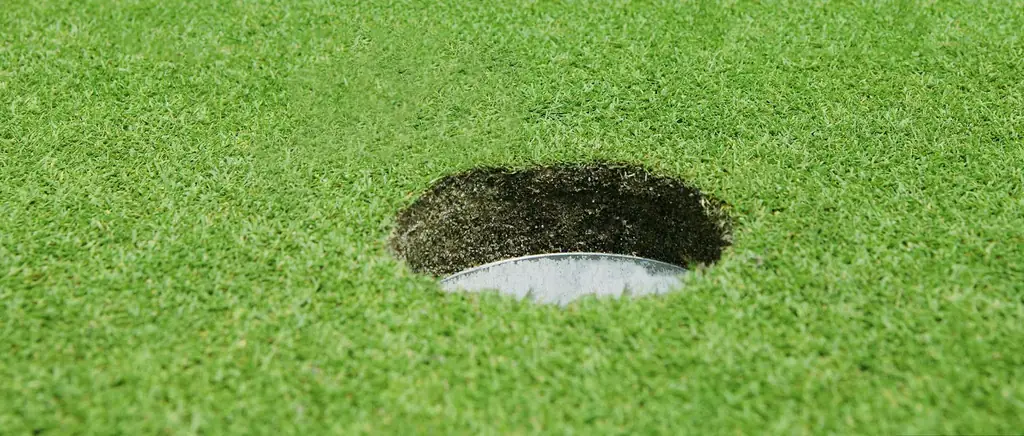
USGA greens rely on a gravel layer under the rootzone and a perched water table where the sand meets the gravel. California greens skip the gravel and put straight sand over drained subgrade, which drains fast but asks the superintendent to water and feed more often.
Our greens take a different route. The 2-inch slit pipe in the subgrade does the drainage work, and a homogeneous rootzone that leans to the organic side holds more moisture and nutrients than straight sand. The pipe backfill and the rootzone are one mix, top to bottom.
We talk through the build with your superintendent and architect during the site visit. We'll also look at the existing greens: how they were built, what's failing and why, and whether a retrofit or a rebuild makes more sense.
Rebuild or Repair? When Golf Green Renovation Makes Sense
Not every wet green needs to be torn out. If a green has good contours and a decent rootzone but drains poorly, our 2-inch slit drainage system can often fix it without a full rebuild. The slits go in narrow trenches, the green stays in play for most of the work and the putting surface heals quickly. Superintendents also use the system to help flush salts out of greens. See our golf green drainage system page for how that works.
Golf green renovation becomes the better choice when the problem is bigger than drainage. That usually means one of these: the rootzone is layered or packed with organic matter, the contours are too severe for today's green speeds, the green has shrunk or lost its pinnable area, or the subgrade was never built to drain in the first place. In those cases, a slit system is treating a symptom. A rebuild fixes the cause.
Our site visit and soil profile review tell us which situation you're in. We'll pull cores, look at the layers and give you a straight answer on whether to retrofit or rebuild. If an inspection is the right first step, our golf course drainage inspection covers it.
Our process
How We Build a Green
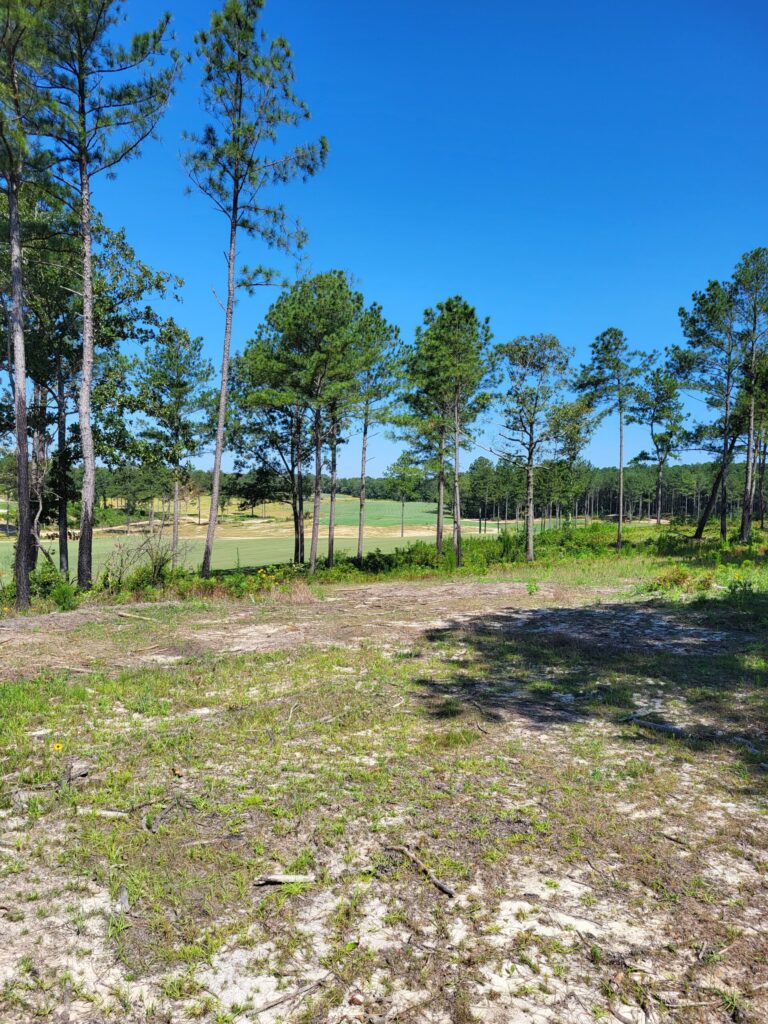
Every green we build follows the same process we use on all of our work, with the green-specific steps added in.
Assessment and Soil Review
We walk the green and its surrounds with your superintendent and look at where water comes from and where it sits. Then we review the soil profile under the existing green and the ground around it. Surface water running onto a green from the surrounds is a common cause of trouble, and we plan for it.
Layout and Pricing
We set the drain line layout and outlets using GPS, coordinate with your architect's contour plans and give you a cost breakdown by area. If you're rebuilding several greens, you'll see each one priced so you can decide on phasing.
Construction
Our own crew strips the old green, shapes and compacts the subgrade, installs the 2-inch slit drainage pipe and backfills it with the rootzone sand mix, then builds the rootzone to depth. Depth and firmness are checked as each layer goes in.
Grassing and Grow-In
The green is seeded or sodded to the club's specifications once the rootzone is finished and firmed. We give you a realistic grow-in plan so the green opens when it's ready, not when the calendar says so.
Final Inspection
We walk the finished green with you, confirm the outlets are flowing and hand over the GPS map of every drain line.
Results
Greens That Hold Up for Decades
A properly built green drains quickly after a storm and firms up sooner, so you lose fewer mornings to closed greens and standing water. Roots go deeper, the turf is thicker and healthier and your superintendent can set the green firmer and faster when the club wants it. A well-built green also needs fewer emergency fixes, which frees up your staff for the rest of the course.
Christie, superintendent at Portland CC, called Turf Rehab one of the best contractors the club has worked with.
See where else we've worked on our project locations page.
A site visit turned into a full master drainage plan. Turf Rehab worked around the club's golf calendar, adjusted after severe weather and installed 2-inch drainage in the fairways.
Nick Roth Golf Course Superintendent, The Tree Farm (SC)
Over two falls of work at Portland, J.B. found the Turf Rehab staff professional, detailed and hardworking. Turf Rehab is now his first call for drainage.
J.B. Christie Golf Course Superintendent, Portland Country Club (ME)
A bunker removal project squeezed into a short, weather-affected window. Joel described the crew as tireless team players who planned the work carefully.
Joel Larsen Golf Course Superintendent, North Shore Country Club (WI)
Brian asked the crew back in November to install as much drainage on the property as possible.
Brian Bromann Ivanhoe Club (IL)
FAQs
Questions we hear most
No. We design and build our own modified green around the 2-inch slit drainage system: slit pipe in a greens subgrade 8 to 12 inches deep, backfilled and built up with 8 to 12 inches of a homogeneous sand rootzone that leans to the organic side, such as 70% sand and 30% organic. We do repair and retrofit existing USGA and California greens.
Get in touch
Plan Your Green Construction Project
Tell us how many greens you're thinking about, how they were originally built (if you know) and what problems you're seeing. Photos of wet areas or soil cores help a lot. We answer every request within 24 hours, and you can call (518) 321-0630 any day from 8 AM to 6 PM.
Location11 Ave A, Cambridge, NY 12816
Phone, every day 8 AM to 6 PM(518) 321-0630