
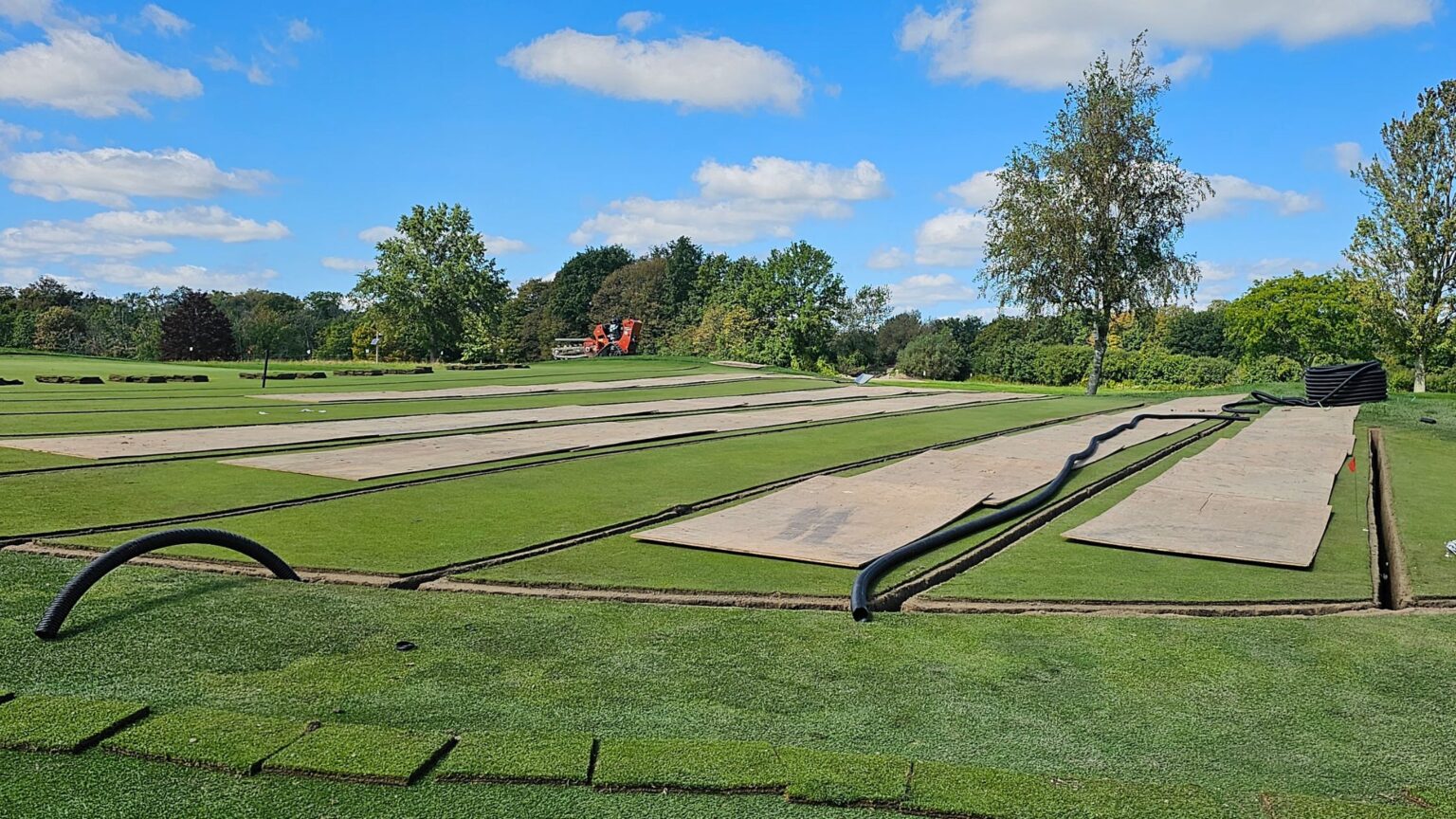
Tee Construction and Laser Leveling for Golf Courses
Turf Rehab builds new tees and brings worn ones back to level. We regrade, laser level, fix the drainage and regrass so your tees play flat, drain after rain and hold up to traffic.
Tees
Tee Construction That Plays Flat and Drains Right
Tee construction is one of the smaller jobs on a golf course, but players notice it on every hole. A tee that's crowned, sloped or full of dips forces players to hunt for a flat spot, so they all end up hitting from the same few square feet. Divots pile up there, the turf never recovers and the rest of the tee goes unused. Add a soft or wet spot, and the tee wears out even faster.
Turf Rehab is a golf course construction and drainage contractor based in Cambridge, NY. Tee restoration has been part of our work for years: grading, laser leveling and fresh grassing to bring worn or uneven tees back so divots heal better and traffic spreads out evenly. Our President, Mark Rowan, has 17 years of golf course construction experience, and our crew brings the same attention to grade and drainage on a tee that we bring to a full green or fairway.
We rebuild tees one at a time or as part of a bigger course project. If you're planning larger work, see our golf course construction page.
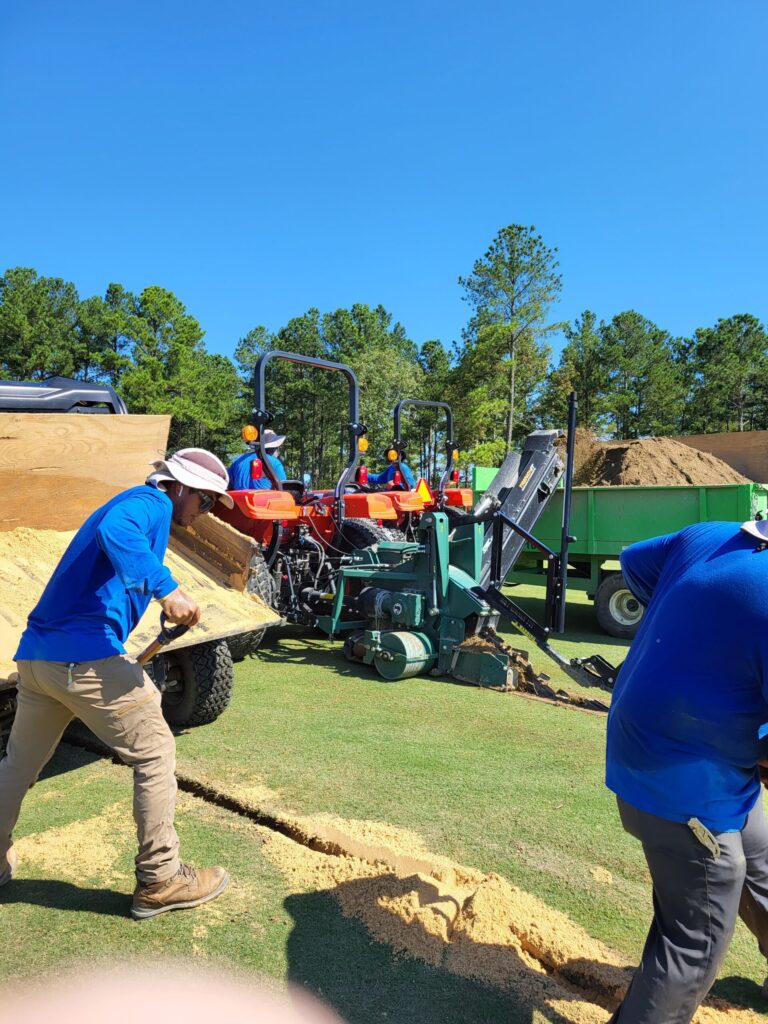
Why Tees Wear Out
Most tees don't fail all at once. They wear out slowly as the surface shifts, the turf thins and the traffic keeps coming. Here are the problems we see most.
Uneven or Crowned Surfaces
Over time, years of topdressing and divot mix build up some parts of a tee more than others. Many older tees were also built with a crown or a tilt that made sense decades ago. Players don't like a sidehill stance, so they crowd onto whatever spot feels flattest. That spot gets destroyed while the rest of the tee sits there in good shape.
Tees That Are Too Small
A tee has to be big enough for the number of rounds it sees. Par 3 tees are the worst, because nearly every player takes an iron divot. When the tee is too small, divots overlap before the earlier ones can heal. No amount of seeding keeps up. Expanding or reshaping the tee gives the turf room to recover.
Wet or Soft Tees
Tees that settled over time or were graded poorly can hold water in low spots. Soft footing makes players slip, divots get bigger and the turf tears instead of cutting cleanly. Small grading errors create pockets where water collects, and tight soil holds that water longer. Some tees need subsurface drainage on top of a good grade.
Our Tee Services
We handle tee work of every size, from a single forward tee to every tee box on the course.
New Tee Construction
New golf tee construction starts with a firm, well-shaped base and a rootzone that drains. We build new back tees, forward tees and family tees to your architect's plan or work with your superintendent on placement, size and shape. Every new tee gets a slight slope so water sheds off the surface, and drainage where the soil calls for it.
Laser Leveling Existing Tees
Golf tee leveling is the most common tee job we do. We strip the existing turf, regrade the surface with laser-guided equipment to a consistent, nearly flat plane and regrass it. The result is a tee that plays the same from front to back and side to side, so players use the whole surface.
Tee Expansion and Reshaping
If a tee is simply too small for its traffic, we expand it. We can also reshape tees to match the look of the rest of the course or an architect's renovation plan. A bigger tee spreads divots across more turf and gives your staff room to move markers around.
Tee Drainage
Where a tee stays soft after rain, a level surface alone won't fix it. We add subsurface drainage, often our 2-inch slit drainage or conventional pipe, tied to an outlet or existing line. Every line gets GPS-mapped. Tee drainage is often done alongside fairway work, which our golf course drainage page covers in more detail.
How Laser Leveling Works on a Tee
Laser leveling uses a laser transmitter set up next to the tee and a receiver mounted on the grading equipment. The transmitter sends out a flat reference plane, and the receiver tells the operator or the machine exactly how high or low the blade is. That lets us cut and fill the surface to a precise grade instead of eyeballing it.
We don't make tees perfectly flat. A perfectly flat surface holds water. We set a very slight slope, usually toward the back or side of the tee, so rainwater sheds off without players feeling it in their stance. The grade we choose depends on the tee's size, the soil underneath and where water can leave the tee.
Once the grade is set, we firm the surface, check it again and prepare it for sod or seed. The whole point of using a laser is consistency: every part of the tee matches the plan, and the next time the tee needs work, your staff has a known starting grade.
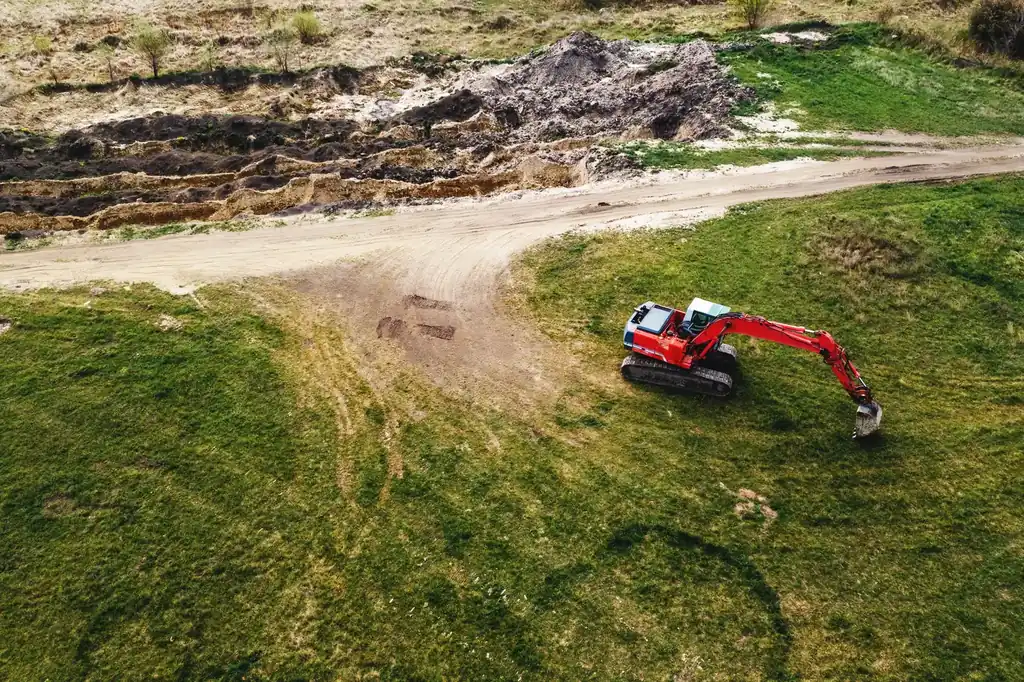
Sod or Seed: Grassing a Rebuilt Tee
Grassing is the last step of tee restoration, and it decides how soon the tee goes back into play. Sod gives you turf right away. After it roots in, a sodded tee can usually go back into play much sooner than a seeded one. It costs more up front, which is often worth it on busy courses and on par 3s.
Seed costs less and lets you choose the exact grass variety you want. It takes longer to establish and needs more care during grow-in, so it works best when the tee can stay closed for a while or when the course has a quiet stretch in the season.
We'll help you decide based on your schedule, budget and grass type, and we give you a realistic grow-in plan either way. Grassing and sod work are part of our standard tee projects.
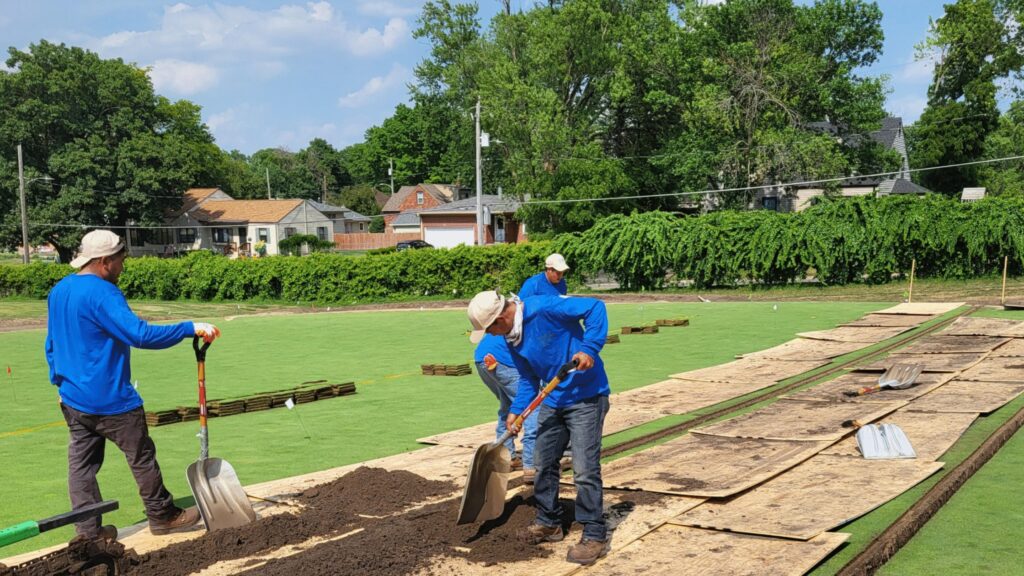
Planning Tee Size and Placement
A good tee project starts with a question your staff already has an answer to: how many rounds does each hole see, and which tees take the worst beating? We use that to size each tee. Par 3s, short par 4s where players hit irons and the first tee usually need the most room. Back tees that only see a handful of players each day can stay smaller.
Placement matters as much as size. Tees tucked into shade or hemmed in by trees struggle to recover because the turf doesn't get enough sun or air movement. Tees placed in low spots collect water from the slopes around them. When we build a new tee or expand an old one, we look at sun, airflow, the path players walk on and off and where water comes from. Sometimes moving a tee a short distance does more for the turf than rebuilding it in the same spot.
Forward tees deserve the same care as the back tees. Many courses are adding forward tees so more players can enjoy the course at a sensible length. Those tees get a lot of play and need the same firm base, level surface and drainage as any other tee. We build them to blend into the hole so they look like they've always been there.
We'll also think about how your crew gets equipment on and off the tee. Gentle slopes on the walk-on and walk-off areas let mowers in without scalping and spread out foot traffic so those entry points don't wear thin.
Our process
Our Process for Tee Projects
Tee work follows the same steps as every Turf Rehab project. We usually work one tee at a time and set up temporary tees so the course stays open.
Want to see where we've worked? Visit our project locations page.
Site Visit
We walk the property with your superintendent and listen first.
Soil Profile
We check the profile, existing drainage and how water moves across the property.
GPS Layout
A layout built around how your crew mows, topdresses and aerifies.
Cost Breakdown
Pricing by hole or area, so the worst spots go first.
Installation
Our own crew, scheduled around your golf calendar.
Final Inspection
We walk the finished work with you and hand over the GPS maps.
From the superintendents
What Superintendents Say
A site visit turned into a full master drainage plan. Turf Rehab worked around the club's golf calendar, adjusted after severe weather and installed 2-inch drainage in the fairways.
Nick Roth Golf Course Superintendent, The Tree Farm (SC)
Over two falls of work at Portland, J.B. found the Turf Rehab staff professional, detailed and hardworking. Turf Rehab is now his first call for drainage.
J.B. Christie Golf Course Superintendent, Portland Country Club (ME)
A bunker removal project squeezed into a short, weather-affected window. Joel described the crew as tireless team players who planned the work carefully.
Joel Larsen Golf Course Superintendent, North Shore Country Club (WI)
Brian asked the crew back in November to install as much drainage on the property as possible.
Brian Bromann Ivanhoe Club (IL)
FAQs
Questions we hear most
A level tee lets players use the whole surface, which spreads divots out and lets the turf recover. It also gives every player a fair stance and drains more evenly. Crowned or uneven tees push everyone onto one small spot, which wears out fast.
Get in touch
Plan Your Tee Project
Send us a list of the tees you want rebuilt, leveled or expanded, with photos if you have them. We'll come back with options, a timeline and a cost breakdown by tee. We answer requests within 24 hours, and you can call (518) 321-0630 any day from 8 AM to 6 PM.
Location11 Ave A, Cambridge, NY 12816
Phone, every day 8 AM to 6 PM(518) 321-0630