

Sand-Based Athletic Field Construction for Fields That Play Through Wet Weather
Turf Rehab handles sand-based athletic field construction for schools, colleges and athletic complexes that can't afford rain-outs. We build sand rootzones over drainage the same careful way golf greens are built, with a crew that has spent decades getting water off playing surfaces.
Sand-based fields
What Sand-Based Athletic Field Construction Means
A sand-based field swaps the top layer of native soil for a rootzone made mostly of sand. Sand has larger pore spaces than clay or silt, so water moves through it quickly instead of sitting on the surface. Under the sand, drain lines collect that water and carry it off the field. The result is a natural grass surface that stays firm after a storm and can host games on days when a soil field would be closed.
If that sounds a lot like a golf green, it is. Sand-based athletic field construction borrows heavily from the way putting greens are built. In a full build, a sand rootzone, often 10 to 12 inches deep, sits over a gravel drainage layer with drain lines in trenches below. The difference in particle size between the sand and the gravel creates a perched water table at the bottom of the rootzone. That small reserve of water feeds the roots between irrigation cycles, while the excess drains away.
Turf Rehab comes from that world. Our team has more than 50 years of combined experience building and draining golf courses and athletic fields, and Mark Luckhardt developed the 2-inch slit drainage process more than 35 years ago. We understand how sand and drainage layers behave together, and we apply that to natural grass athletic field construction.
This page covers the sand build specifically. If you are still deciding between sand and native soil, start with our overview of sports field construction.
Sand Cap Field or Full Sand Rootzone?
There are two main ways to build a sand-based sports field. Both put sand at the surface. The difference is what sits underneath and how much sand goes in.
Sand Cap Construction Over Native Soil
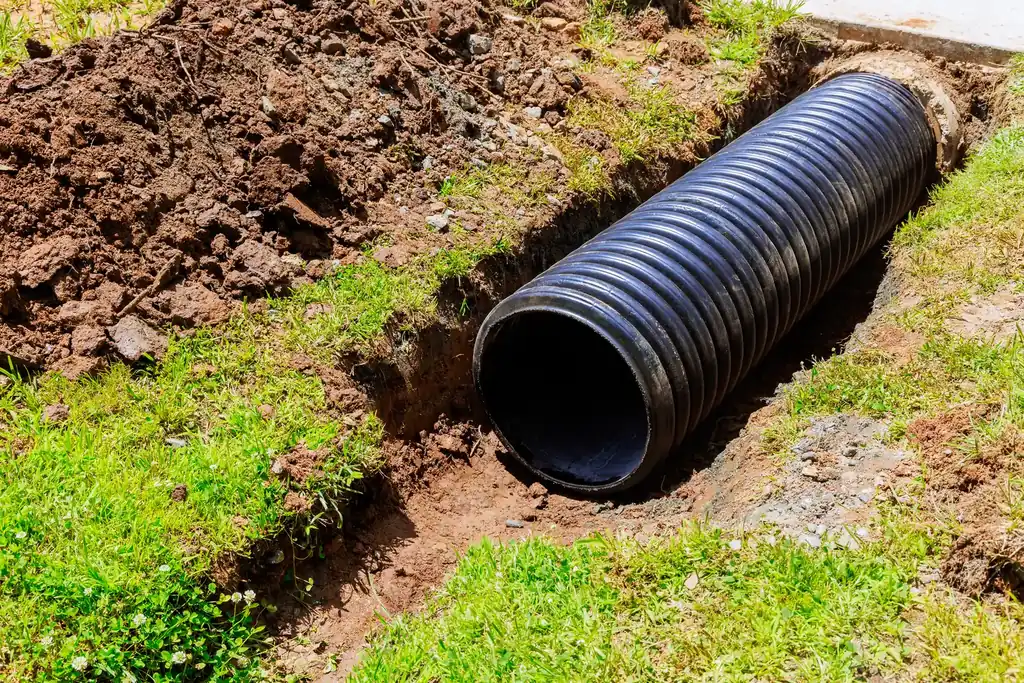
A sand cap field places a layer of sand directly on top of the graded native soil, with drain laterals trenched below. The sand gives you faster surface infiltration and better footing, and the drain lines carry water away once it moves through the cap. Because you're reusing the native soil as the base, a sand cap costs less than a full rootzone build.
Sand caps work well for programs with a busy schedule and a moderate budget. They do depend on the drain lines and on keeping the sand layer from getting mixed into the soil below through years of aeration and play. We design the cap depth and drain spacing around your soil and how hard the field gets used.
Full Sand Rootzone Over a Drainage Layer
A full sand rootzone follows the putting green method most closely. The subgrade is shaped and compacted, drain lines are installed in a herringbone or grid pattern, a gravel drainage layer goes over the drains, and the sand rootzone goes on top. In the USGA putting green method that many sand fields follow, that means about 4 inches of gravel under about 12 inches of rootzone sand.
This build drains the fastest and gives the most consistent surface. It also costs the most and asks the most of your maintenance staff. For stadium fields, college game fields and complexes that host weekend tournaments in any weather, it's usually worth it.
Our process
How We Build a Sand-Based Sports Field
Every sand field starts with the site visit, soil profile review, GPS drainage layout and cost breakdown by area we use on all our projects. Once the plan is approved, construction follows this order.
Shape the Subgrade
The subgrade is the foundation of the whole field. We grade it to the same crown or slope the finished surface will have, then firm it up. That way the sand rootzone ends up the same depth everywhere. A subgrade that is off by a few inches leads to thin sand in some spots and deep sand in others, and the field will drain and play differently across its width.
Install the Drain Lines
Next, our crew trenches and installs the drain lines. Laterals run across the field and tie into a collector line that carries water to a safe outfall. Spacing and pipe size depend on the field's size, slope, local rainfall and the rootzone design. Every line is located with GPS, so you'll know exactly where it sits if a repair or tie-in is ever needed. More on athletic field drainage
Place the Drainage Layer
On a full rootzone build, a gravel layer goes down over the drains. The gravel is chosen to work with the sand above it so the sand doesn't wash down into the stone. When the two materials don't bridge well, an intermediate choker layer goes between them. On a sand cap build, this step is replaced by trench backfill over the laterals.
Spread and Grade the Sand Rootzone
The sand goes on in lifts and gets graded to the final surface. Keeping the depth uniform matters as much as getting the surface smooth. A uniform rootzone holds water evenly, which means the turf dries down evenly and the footing stays consistent from sideline to sideline.
Sod or Seed the Surface
Most programs choose sod on a sand field because it gets them playing sooner. Seeding costs less up front but needs a longer grow-in before the field can take cleats. We handle grassing and sod work as part of the build and help you pick the grass that fits your climate and season.
Grow-In and Final Inspection
Before handover, we inspect the field and confirm the drainage and surface are working as designed. You get a realistic grow-in plan that fits your schedule, so the turf roots down into the sand before the first game.
Picking the Right Sand
Sand is not all the same, and the wrong sand can sink a field. Sand that is too fine drains slowly and compacts. Sand that is too coarse or too uniform moves under cleats and gives poor footing. The goal is a sand with the right particle size range so it drains fast but still locks together under play.
Most sand-based fields are built with sand tested against a particle-size spec, often the same USGA range used for putting green rootzones. Some builds add a small amount of organic amendment, like peat or compost, to help the rootzone hold more water and nutrients while the turf establishes. We help select rootzone sand that fits the design and is available within a reasonable haul of your site.
Living With a Sand-Based Field
A sand field is a great surface, but it changes how you maintain it. Before you commit, here's what to plan for.
Water
Sand holds less water than soil. In summer, a sand rootzone dries out faster, so the field needs lighter, more frequent irrigation. A good irrigation system with even coverage is a must, because dry spots show up quickly on sand.
Fertility
Sand also holds fewer nutrients than soil. Nutrients that a soil field would keep in reserve wash through sand faster. Most sand fields do best on smaller, more frequent fertilizer applications through the growing season rather than a couple of big ones.
Topdressing and Aeration
Over time, organic matter builds up at the top of any rootzone. On a sand field, that layer can slow infiltration and undo some of what you paid for. Regular core aeration and sand topdressing keep the surface sand-based and draining for years. If an older sand field has already lost its drainage, our sports field renovation work can open it back up.
Is a Sand-Based Field Right for Your Program?
A sand-based field makes the most sense when a field has to play a lot of games in all kinds of weather. If you're constantly moving games, if your field sits in a low spot that collects water, or if you host tournaments that can't be rescheduled, sand is likely the right call.
It's less of a fit when the field sees light use and the maintenance budget is thin. In that case, a native soil field with good subsurface drainage often gives you more for the money. We'll tell you honestly which way we would go after we've seen the site and the soil. Our overview of sports field construction lays out all three construction types side by side.
FAQs
Questions we hear most
A cap only needs to be deep enough to keep the playing surface out of the native soil, so it uses far less sand than a full rootzone. That's where most of the cost savings come from. We set the exact depth during design.
Get in touch
Plan Your Sand-Based Field
Send us a project review request with the field location, the sports it will host and how many hours a week it gets used. Photos of the current site, any wet areas and existing plans all help us give you a faster, more useful answer. We answer requests within 24 hours.
Prefer to talk it through? Call (518) 321-0630, any day from 8 AM to 6 PM.
Location11 Ave A, Cambridge, NY 12816
Phone, every day 8 AM to 6 PM(518) 321-0630