
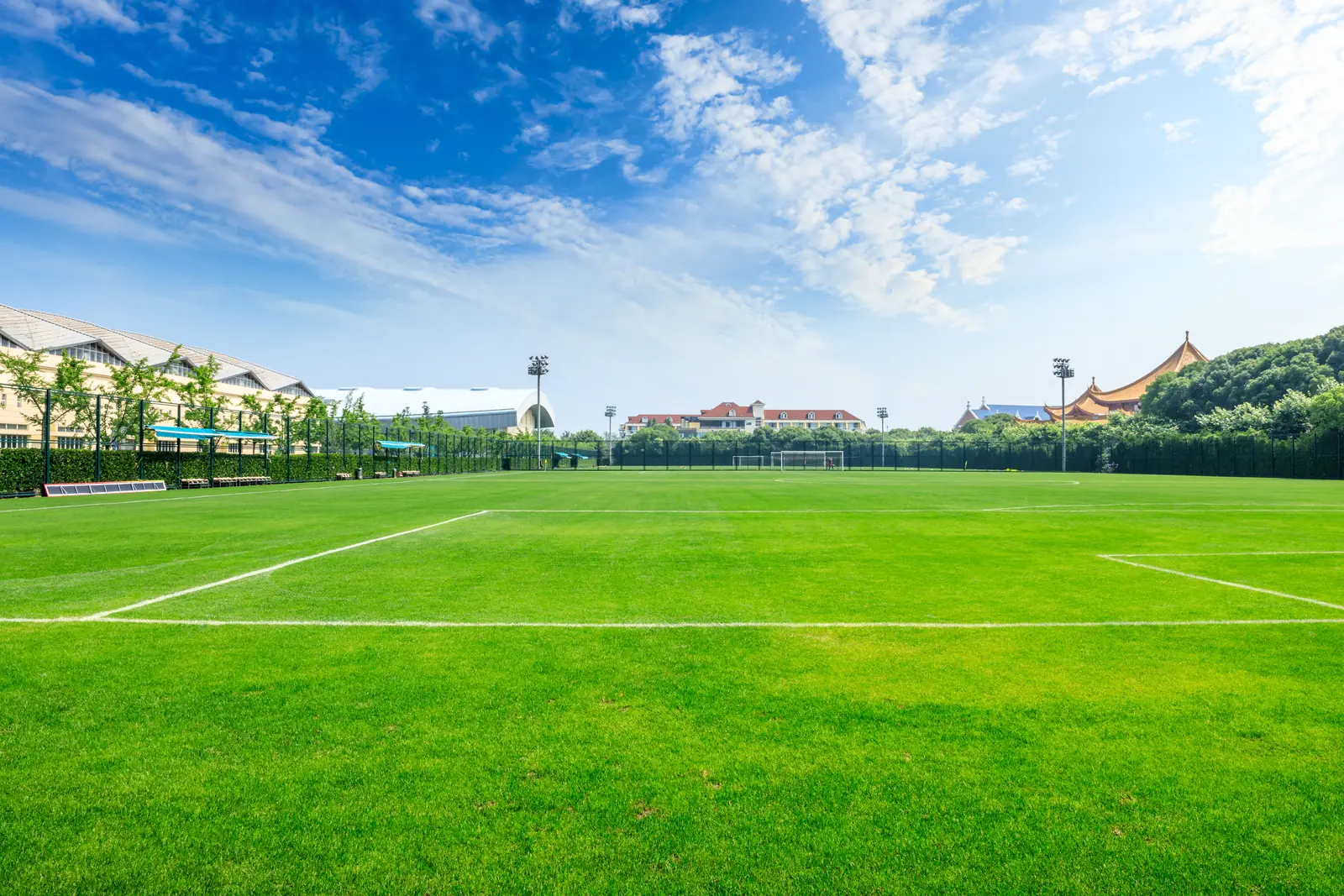
Sports Field Construction Built From the Drainage Up
Turf Rehab builds natural grass athletic fields for schools, parks and athletic complexes. Our sports field construction starts below the surface, with grading and drainage designed by a team with more than 50 years of combined experience getting water off playing surfaces.
Years combined experience
Years of 2" slit drainage
States served
Sports fields
Natural Grass Sports Field Construction for Schools, Parks and Athletic Complexes
A new field is a big investment, and most of what decides whether it works sits under the grass. Sports field construction covers everything from the shaped subgrade to the drain lines, the rootzone and the turf on top. When those layers are planned together, the field drains after a storm, holds footing under cleats and recovers between games. When they aren't, you end up with a brand-new field that floods the first wet April.
Turf Rehab handles athletic field construction for school districts, parks departments, colleges, private schools, sports complexes and training facilities. We also work on surfaces most athletic field contractors don't touch, like polo fields and horse arenas. The common thread is natural grass, and the common problem is water. Our founders, Mark Rowan and Mark Luckhardt, have spent most of their careers fixing saturated turf on golf courses and athletic fields. Mark Luckhardt developed the 2-inch slit drainage process more than 35 years ago, and that system is still part of how we build and repair fields today.
Every field we build is handled by our own crew, running equipment that is set up for natural grass work. We don't hand your project off to a subcontractor we met last week. The people who walk the site with you are the people who grade it, trench it and grass it.
Projects range in size. Some clients need one new practice field squeezed onto a tight campus. Others are planning several game fields and a training area at once. Either way, the plan follows the same order: understand the soil, design the drainage, then build the playing surface on top of it. More on athletic field drainage
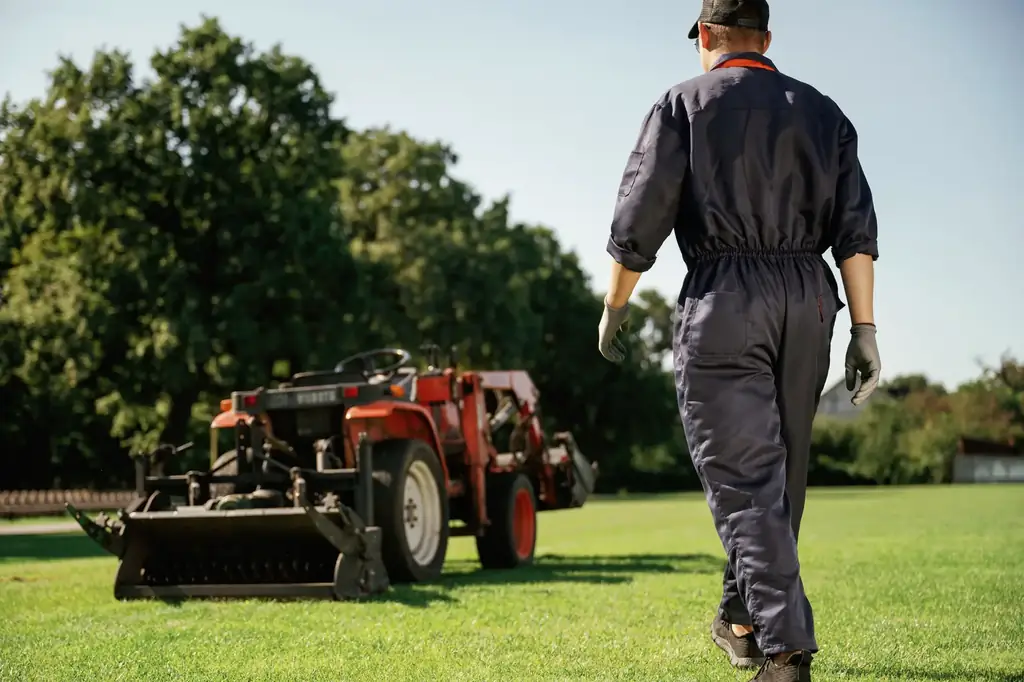
Why Drainage Comes First in Athletic Field Construction
Ask any field manager what goes wrong with a new field and the answer is usually the same. It looked great on opening day, then it stayed wet for two days after every rain. Games got moved. Practices got pushed to the parking lot. The turf thinned in the middle by October.
That happens because water has nowhere to go. Heavy clay soils hold water for a long time, and cleats compact the surface even more. Sandy ground moves water faster but can still sit on a dense layer below. Our approach treats soil type as the starting point, because it controls how water moves through the field and how the turf performs on top of it.
Good athletic field construction handles water in two ways. First, the surface is graded with a crown or slope so heavy rain sheds off the playing area instead of ponding in the middle. Second, subsurface drains pull out the water that soaks in. In a saturated field, a perched water table sits just under the surface and keeps the top few inches soft. A drain system lowers that water table so pore space opens up, air gets back to the roots and the surface firms up again.
We size and space those drains based on the soil profile, the slope, how the field is used and where the water can legally and safely leave the site. That last part matters. A field that drains well but dumps water onto a neighbor's lot or a parking area just moves the problem. We plan outfalls and collector lines as part of the build, not as an afterthought.
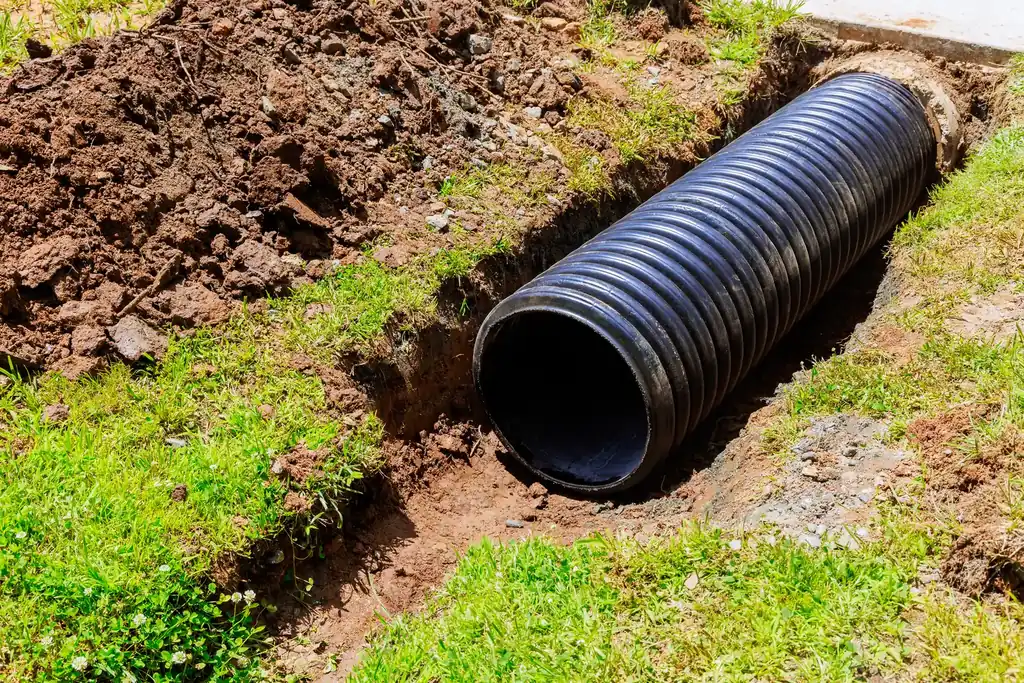
Types of Natural Grass Fields We Build
There is no single right way to build a sports field. The best build for a busy high school game field is different from the best build for a youth soccer complex on a tight budget. Here are the main construction types we work with, and how they compare.
Native Soil Fields
A native soil field uses the existing soil on site, cleaned up, graded and crowned. It is the lowest-cost way to build a natural grass field, and it can work well when the soil drains reasonably and the field doesn't see heavy use. The weak point is compaction. As players pack the surface, infiltration slows down and water starts sitting on top.
We make native soil fields far more reliable by adding subsurface drainage during construction. Slit drains and pipe laterals give water a fast path down and out, so the field recovers after storms even when the soil itself is tight. For many schools and parks, a well-drained native soil field is the right balance of cost and performance.
Sand-Cap Fields
A sand-cap field places a layer of sand over the native soil, with drain lines installed below. The sand gives the surface better footing and faster infiltration, while the native soil underneath keeps costs lower than a full sand build. Sand-cap construction is a good middle ground for programs that play a lot of games but can't fund a full sand rootzone.
Full Sand-Based Fields
A full sand-based field is built more like a golf green. A sand rootzone, often 10 to 12 inches deep, sits over a drainage system, and in many builds over a gravel layer as well. These fields drain much faster than native soil and can stay playable through weather that would shut a native soil field down. The tradeoff is upkeep: sand holds less water and fewer nutrients, so it needs more frequent irrigation and fertility.
If you are leaning toward a sand build, our page on sand-based athletic field construction goes into the layers, the sand selection and what maintenance looks like after opening day.
Our process
How Our Athletic Field Construction Process Works
Every field project follows the same six steps. The order matters, because each step depends on what we learned in the one before it.
Site Visit and Assessment
We start by walking the site with you, your field manager or your facilities director. On an existing field we look for soft pockets, worn patterns and the areas that stay wet longest. On an open site we look at how water arrives from surrounding ground, where it collects and where it can leave.
Soil Profile Review
Next we look at the soil. We review the profile, the existing grades and how water naturally moves across the area. This tells us whether a native soil build will hold up, whether a sand cap makes sense, or whether a full sand rootzone is worth the cost.
Drainage Layout and System Design
With the soil and grades understood, we design the drainage system and stake it out using GPS. The design is based on how the field will be used, your budget and your long-term goals. Line spacing, pipe sizes, collector lines and outfalls are all set here, and the GPS layout gives you a record of where every line sits for future repairs.
Cost Breakdown by Area
You get a cost breakdown by area, so you can see what the drainage, grading, rootzone and grassing each cost. That makes it easier to take a plan to a school board or a parks committee, and it makes phasing possible if the budget needs to stretch over more than one year.
Construction and Installation
Our crew handles the build: subgrade shaping, drainage trenching and pipe, rootzone material, final grading and grassing with sod or seed. We schedule around your season and adjust when weather turns, which matters when a field has to be ready for a fall opener.
Final Inspection
Before we call the job done, we inspect the finished field and confirm the surface and drainage are working as designed. You get a grow-in plan that fits your schedule, so the turf is mature enough to handle play before the first game.
Built for the Way Each Sport Wears a Field
Every sport beats up a field in its own way. A construction plan that ignores that will wear out in the same spots year after year. We build with the sport in mind.
Football Fields
Football traffic concentrates between the hashes, and that center strip takes the most cleat damage and compaction. We pay close attention to drainage and rootzone strength through the middle of the field so the heaviest-used turf has the best chance to recover between games.
Soccer Fields
Soccer wears a field more evenly across the full width, with extra damage in the goal mouths and along the center channel. Because play covers so much of the surface, uniform drainage across the whole field matters more than on most other sports fields.
Baseball and Softball Fields
On baseball and softball fields, the outfield is where water problems hide. Many fields develop soft pockets in the outfield that come back every spring. We build outfield drainage and grades that move that water out, so early-season games don't get moved because center field is still wet.
Lacrosse and Multi-Use Fields
Lacrosse fields, and fields shared by several sports, see traffic in shifting patterns as lines get painted and repainted. These fields need drainage that covers the whole playing area, since you can't predict exactly where wear will land from one season to the next.
Practice and Training Fields
Practice fields often take more hours of use than game fields, with drills run in the same spots day after day. We build them to recover fast, with drainage that keeps the surface firm through a full week of practice and a rootzone that holds up to repeated wear.
What to Look for in Sports Field Construction Companies
If you are comparing sports field construction companies, a few questions will separate the good ones quickly. Ask who will actually do the work. Many sports field contractors sell the job and then subcontract the field crew. Ask how they plan drainage, and whether they look at the soil before they price the job. Ask for a written cost breakdown by area so you can compare bids line by line.
Ask for references, too, and call them. Our clients expect detail and hate surprises. J.B. Christie at Portland Country Club called our crew one of the best the club has worked with. That same crew builds and drains athletic fields.
You can see where we have worked on our project locations page.
Who We Build Fields For
We build and drain natural grass fields for a wide range of owners, including:
- Public school districts and private schools
- Colleges and training facilities
- Municipal parks and recreation departments
- Multi-field athletic complexes
- Private clubs with lawn sports or practice areas
- Polo fields and horse arenas
If you already have a field that needs help rather than a new build, our sports field renovation service covers regrading, re-grassing and drainage retrofits on fields that are still in use.
FAQs
Questions we hear most
The cost depends on the construction type, the size of the field, the soil on site and how much drainage the field needs. A native soil field with added drainage costs far less than a full sand-based field over a gravel layer. We give you a cost breakdown by area after the site visit and soil review, so you can see exactly where the money goes.
Get in touch
Start Planning Your New Field
The fastest way to get a real answer is to send us a project review request. Tell us where the field is, what sports it will host, and how many hours of use you expect each week. Photos of the site, any existing plans and notes on wet areas all help. We answer requests within 24 hours.
You can also call us at (518) 321-0630, any day from 8 AM to 6 PM. We're based in Cambridge, New York, and we travel for field and course projects across 16 states, from Maine to Florida and west to Iowa and Minnesota.
Location11 Ave A, Cambridge, NY 12816
Phone, every day 8 AM to 6 PM(518) 321-0630